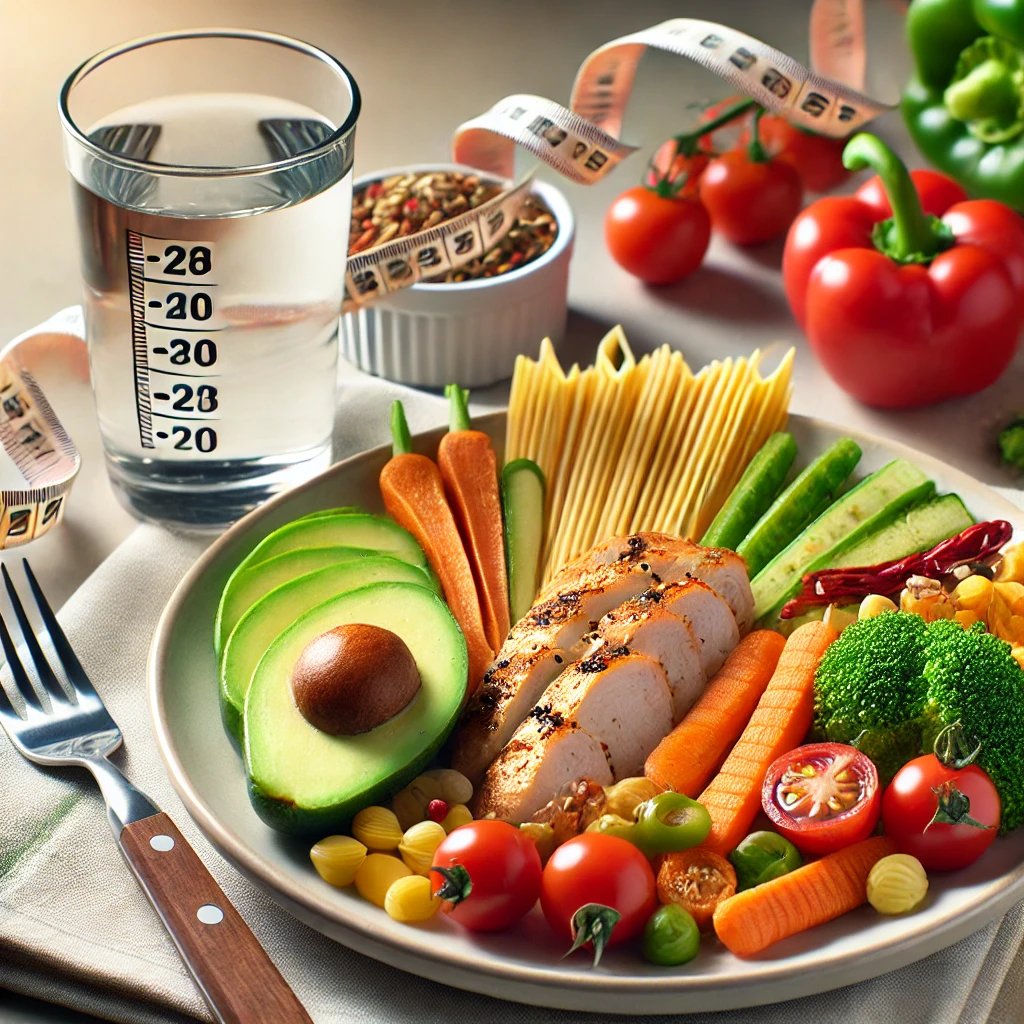
How to Calculate Your Daily Caloric Intake

Managing your daily caloric and macronutrient intake is crucial for maintaining good health, achieving weight goals, or enhancing physical performance. This guide outlines how to calculate daily caloric needs and properly balance proteins, carbohydrates, and fats, specifically tailored for athletes, both men and women.
Daily Caloric Needs: Calculating Your Basal Metabolic Rate (BMR)
Your daily caloric needs depend on factors like age, gender, weight, height, and activity level. To determine this, start by calculating your Basal Metabolic Rate (BMR).
Harris-Benedict Formula for BMR:
- Men: BMR = 88.362 + (13.397 x weight in kg) + (4.799 x height in cm) – (5.677 x age)
- Women: BMR = 447.593 + (9.247 x weight in kg) + (3.098 x height in cm) – (4.330 x age)
Multiply your BMR by your activity level:
- Sedentary (little to no exercise): BMR x 1.2
- Lightly active (light exercise 1-3 times/week): BMR x 1.375
- Moderately active (moderate exercise 3-5 times/week): BMR x 1.55
- Very active (hard exercise 6-7 times/week): BMR x 1.725
- Super active (intense training): BMR x 1.9
This gives you the total calories needed to maintain your weight. Adjust calories by -10 to 20% for weight loss or +5 to 10% for muscle gain.
Macronutrient Breakdown
Macronutrients, proteins, carbohydrates, and fats are vital for body functions. A balanced diet consists of these in the right proportions.
Proteins
Proteins support muscle repair and growth, making them essential for active individuals.
- Recommended intake: 1.2 to 2.2g per kg of body weight.
- Example for a 75 kg man: 90g to 165g per day.
- Example for a 60 kg woman: 72g to 132g per day.
Best sources: Lean meats, fish, eggs, dairy, legumes, tofu.
Carbohydrates
Carbs are the body’s primary energy source, especially for physical activity. Focus on complex carbs for steady energy release.
- Recommended intake: 45 to 65% of total calories.
- Example for a 2000 kcal diet: 225g to 325g per day.
- Example for a 2500 kcal diet: 281g to 406g per day.
Best sources: Whole grains, fruits, vegetables, legumes, tubers.
Fats
Fats are essential, not an enemy! They aid in vitamin absorption and hormone production. Opt for healthy fats like unsaturated fats and avoid trans fats.
- Recommended intake: 20 to 35% of total calories.
- Example for a 2000 kcal diet: 44g to 78g per day.
- Example for a 2500 kcal diet: 56g to 97g per day.
Best sources: Avocados, nuts, seeds, olive oil, fatty fish.
Important: Fats are crucial for your body and should not be excessively reduced. Healthy fats promote brain function, support cell structure, and regulate metabolism.
Example Macronutrient Breakdown
Here’s a daily example for both men and women consuming 2000 kcal:
Women (2000 kcal per day):
- Proteins: 25% (125g of protein = 500 kcal)
- Carbs: 50% (250g of carbs = 1000 kcal)
- Fats: 25% (55g of fats = 500 kcal)
Men (2500 kcal per day):
- Proteins: 30% (188g of protein = 750 kcal)
- Carbs: 50% (312g of carbs = 1250 kcal)
- Fats: 20% (56g of fats = 500 kcal)
Quality of Food Matters
Nutritional quality is as important as quantity. Opt for whole, minimally processed foods that offer vitamins, minerals, and fiber.
- High-quality proteins: Fish, lean meats, legumes.
- Complex carbs: Whole grains, fruits, vegetables.
- Healthy fats: Olive oil, nuts, seeds, and fatty fish.
Adjusting for Your Goals
- Weight Loss: Reduce calorie intake by 10-20% and prioritize protein to preserve muscle.
- Muscle Gain: Increase calories by 5-10% and focus on high protein and carb intake.
- Maintenance: Balance your macronutrient intake according to activity levels and maintain caloric intake.
Conclusion
Managing daily caloric intake and macronutrients is key to achieving health and fitness goals. Calculate your needs, adjust based on activity level, and ensure your diet is rich in quality proteins, healthy fats, and complex carbs. Remember, fats are essential, so don’t be afraid to include them in your diet.




Post Comment